

Balearia is taking another leap towards zero-emission maritime transportation. After successfully launching the world's first electric fast ferry, followed by a sister ship, the Spanish operator is gearing up to tackle an extended route. For the first time, two new twin ferries will travel between Spain and Morocco with no emissions.
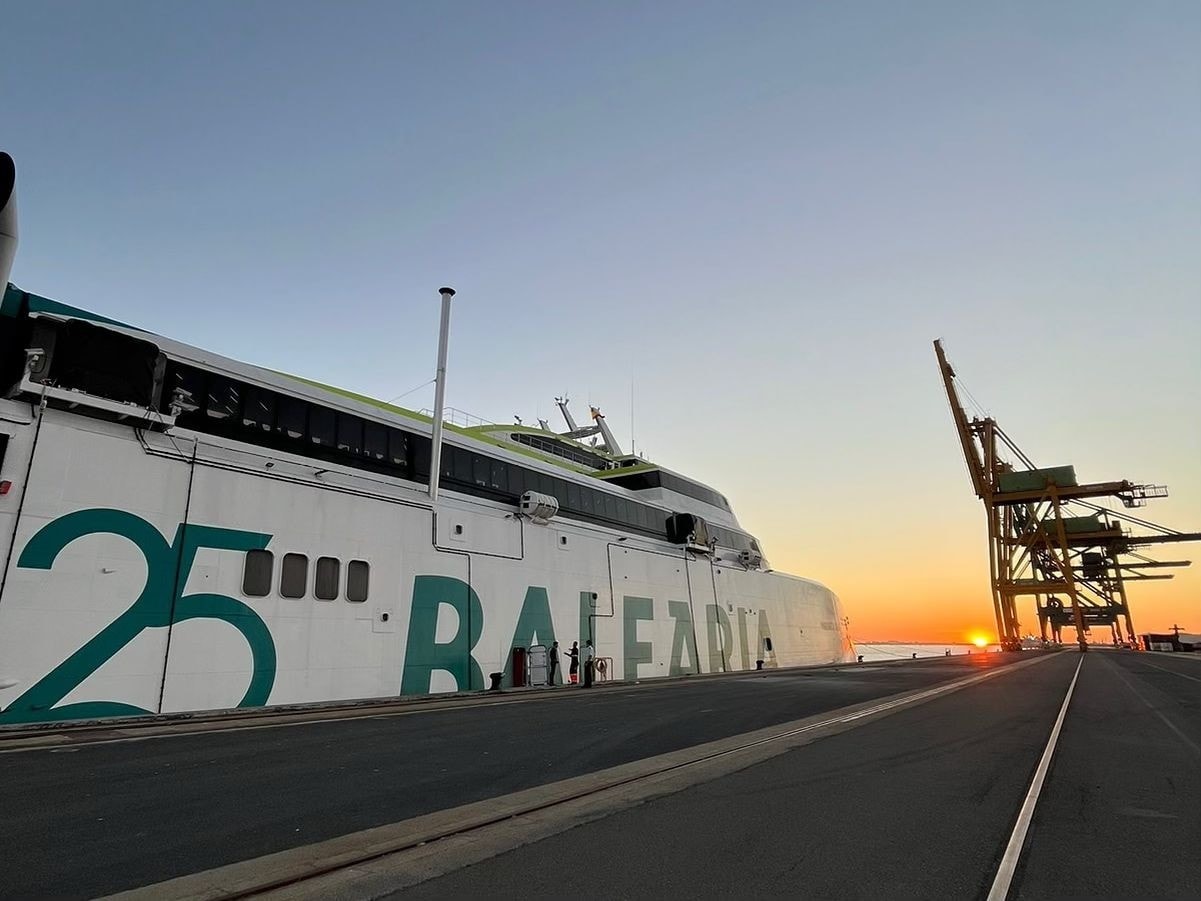
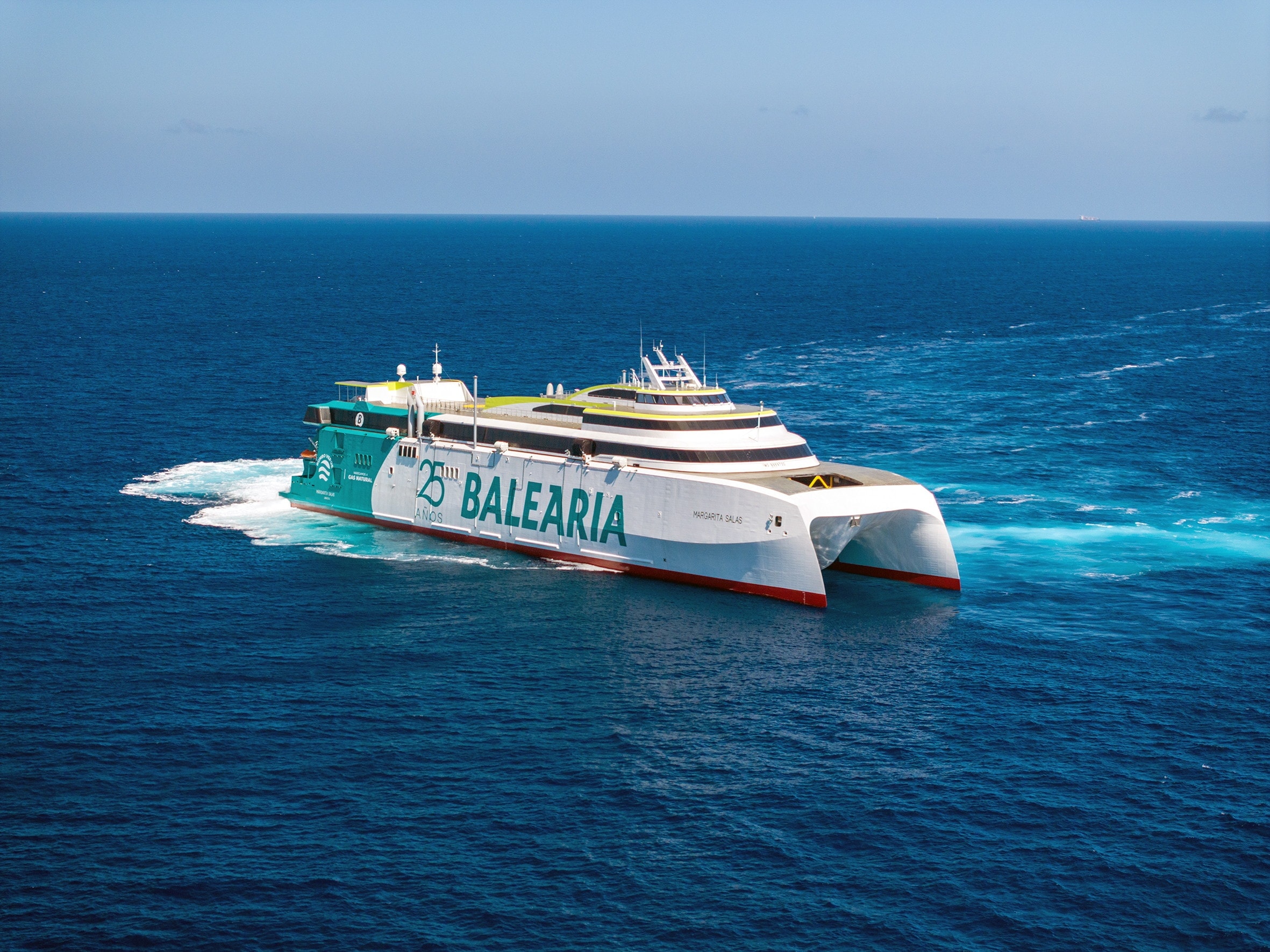
In 2021, Balearia unveiled Eleanor Roosevelt as the world's first dual-gas high-speed ferry. Three years later, it was followed by Margarita Salas, an upgraded version of the pioneering ferry. Equipped with Wartsila's 31DF (dual fuel) engine (considered the most powerful and fuel-efficient in its class) and two LNG (liquid natural gas) storage and supply systems, the new ferry was ready to transport 1,200 passengers and 450 vehicles.
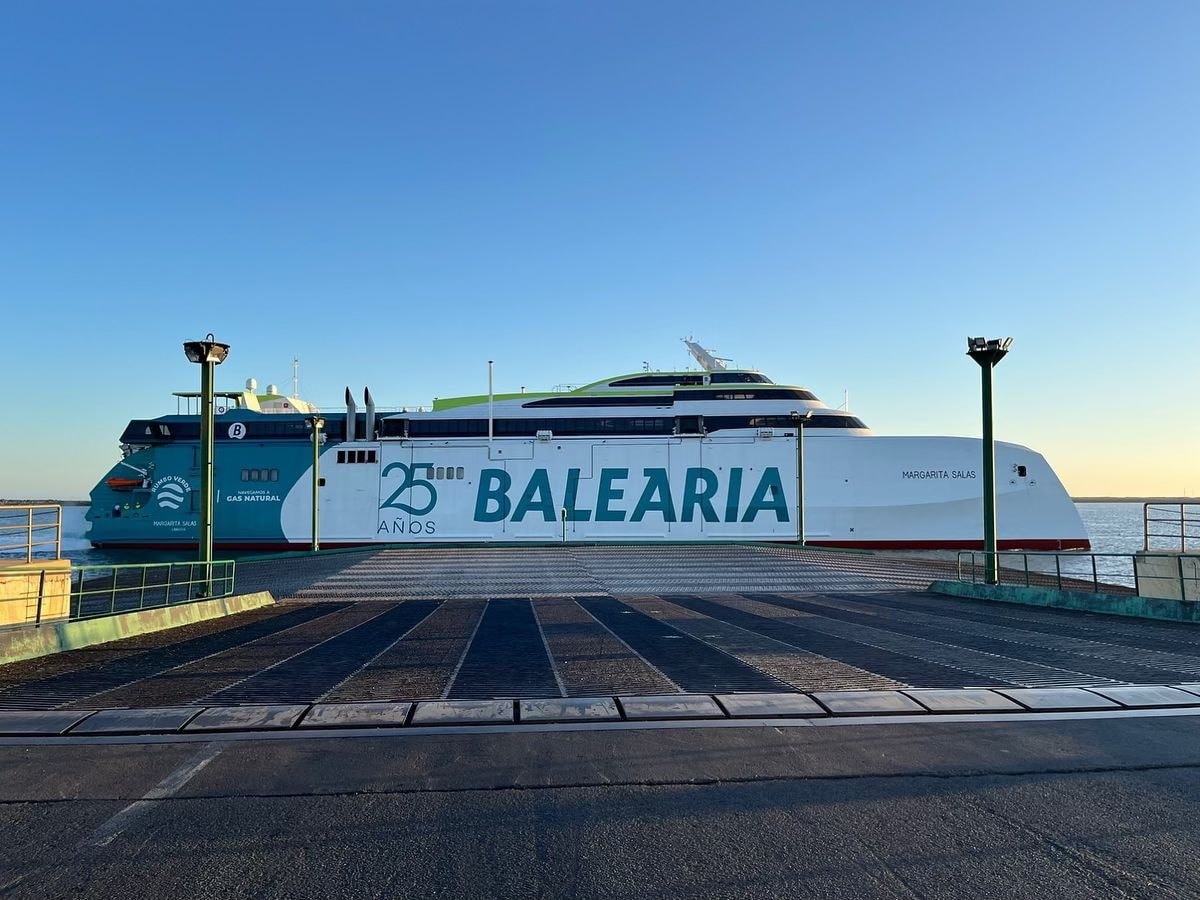
The Margarita Salas connects Barcelona to Mallorca, and Eleanor Roosevelt operates on several short-distance routes. This new project is taking things further, literally and figuratively. Two new Balearia ferries will travel between Spain and Morocco, a route that is more than 50% longer than the Ibiza-Formentera. This means a new, bigger challenge for e-ferry operations, including port infrastructure.
The challenge came in the form of a public tender initiated by the Port Authority of the Bay of Algeciras. Baleria, who won the tender, has envisioned a complex solution that will create what it considers to be the first-ever 100% green corridor between Spain and Morocco. This includes building two twin e-ferries from scratch and upgrading the two ports with adequate charging infrastructure.
These future ferries are meant to travel from Algeciras (Spain) to Tangier (Morocco) with zero emission at the standard speed of regular ferries. The batteries onboard are expected to have a capacity of 11.5 MWh gross. During the one-hour stopover at each port, the batteries are fully recharged with the help of the shore power supply.
Balearia's new ferries will also feature diesel combustion engines, but only as backup in case of emergency. The vessels are designed to rely entirely on electric power during regular operations. Another important benefit is that noise pollution is also entirely eliminated. The electric propulsion will make these trips between Spain and Morocco not only green but also noise-free and vibration-free.
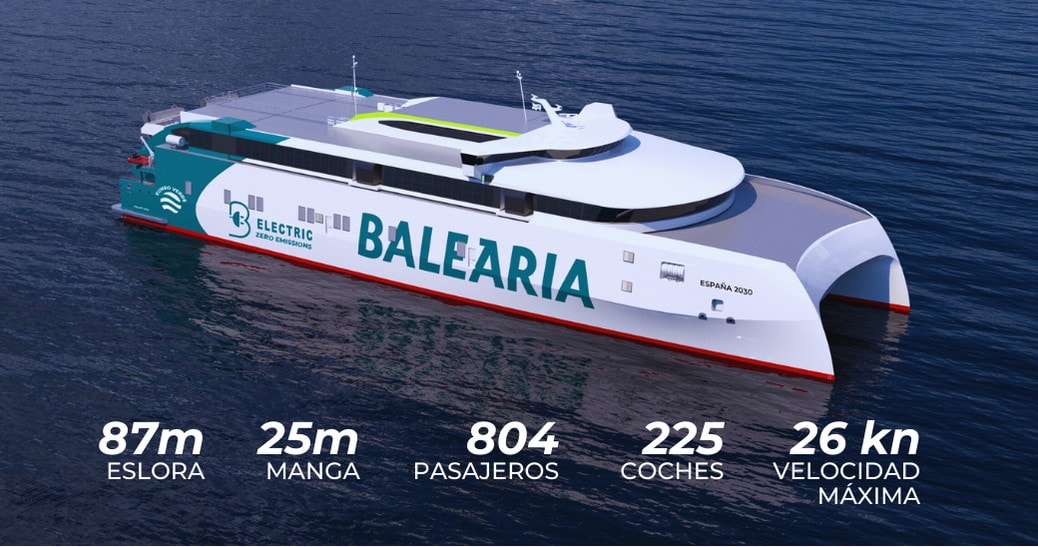
In terms of capacity, each of the two ferries will be able to carry 800 passengers and 225 vehicles. The twin vessels will be 87 meters long (285 feet) and 25 meters wide (82 feet). On top of the environmental benefits and cost efficiency, Balearia also promises a comfortable experience onboard, with modern interiors that match the`ships’ technological innovation.
The twin electric fast ferries will be built in Spain and are expected to enter service on the Spain-Morocco route in two to three years. When this happens, it will officially create one of the world's first 100% green corridors.